


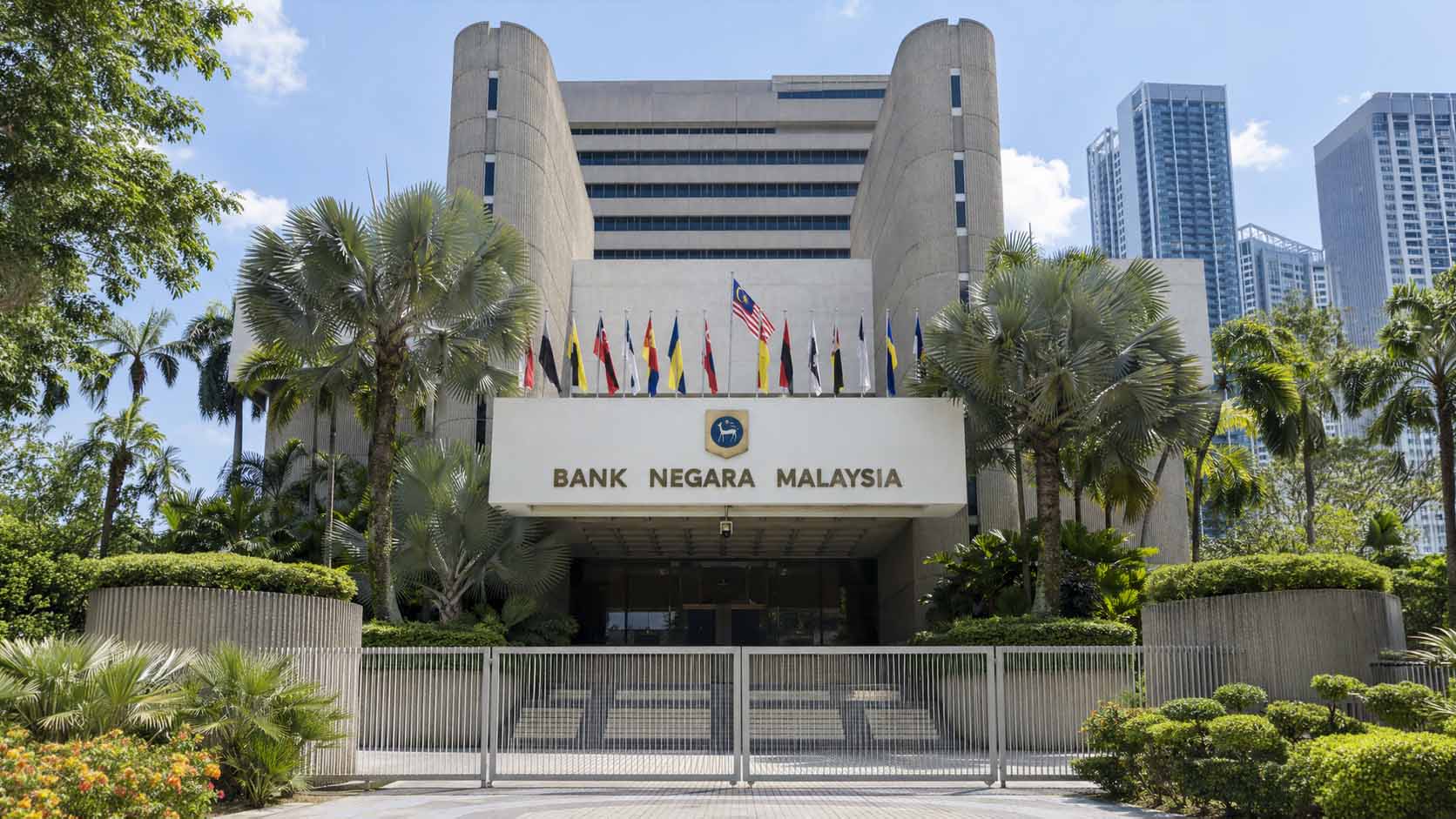
If your monthly home loan instalment has changed, start with one question: Is your financing on a floating rate?
Most floating-rate home loans or home financing facilities use a reference rate such as the Standardised Base Rate (SBR), Base Rate (BR), Base Lending Rate (BLR) or Base Financing Rate (BFR). A change in the applicable reference rate may affect your effective rate and monthly instalment.
However, an instalment change is not always caused by the Overnight Policy Rate (OPR). Other contractual or account-specific factors may apply. If the change follows a reference-rate adjustment, the bank’s notice should state the revised instalment and effective date. Where a reference-rate revision is combined with another adjustment, the notice should explain the separate causes.
The short answer: A floating-rate home loan instalment may change when its reference rate changes or when another contractual adjustment applies. Newer Malaysian retail facilities generally use SBR, which is linked to Bank Negara Malaysia’s OPR. Older facilities may use BR, BLR or BFR. The correct first step is to read the bank’s notice and check your facility terms.
What are OPR, SBR, BR, BLR and BFR?
These terms are connected, but they are not interchangeable.
| Term | What it means | Why it matters |
|---|---|---|
| OPR | The Overnight Policy Rate set by Bank Negara Malaysia | It influences lending and financing rates across the banking system. |
| SBR | The Standardised Base Rate for relevant new floating-rate retail facilities and refinancing from 1 August 2022 | SBR is set at the same level as the prevailing OPR. |
| BR | The Base Rate used for many floating-rate facilities under the previous framework | An older facility may still refer to BR. |
| BLR or BFR | Base Lending Rate or Base Financing Rate | Some older conventional or Islamic facilities may still use these reference rates. |
| Spread | The amount added above the reference rate | It reflects pricing components that can include credit and liquidity risk, operating cost and the bank's margin. |
| Effective rate | The reference rate plus the applicable spread | This is the rate that affects the cost of your facility. |
For an SBR-linked facility, the basic formula is:
Effective lending or financing rate = SBR + spread
For example, if SBR is 2.75% and the facility’s spread is 1.20%, the effective rate is 3.95% per year. This is an illustration, not a current bank offer.
Two banks can use the same SBR while offering different effective rates because the spreads and facility terms can differ. BNM’s glossary explains the transition from BLR/BFR to BR and then SBR.
Does an OPR change automatically change my instalment?
An OPR movement can affect a floating-rate home loan or financing facility linked to SBR, BR, BLR or BFR. It generally does not affect a genuinely fixed-rate facility in the same way.
Under the revised framework, a bank must adjust SBR by the same amount as an OPR change within seven working days. For covered pre-1 August 2022 retail facilities, BR and BLR—including BFR in the Islamic-financing context—must be adjusted concurrently by the same amount as the SBR change. This does not mean that every borrower has the same final rate or the same ringgit change in instalment.
The repayment effect depends on:
- The applicable reference rate and spread
- Outstanding balance
- Remaining tenure
- Repayment structure
- Facility terms
- Whether another account-specific adjustment applies
The instalment may not change on the date of the OPR announcement. The bank needs to calculate the revised amount and provide the required notification.
What changed under Malaysia's 2026 Reference Rate Framework?
Bank Negara Malaysia issued the revised framework on 27 March 2026, and it came into effect on 1 July 2026. Its instalment-revision timeline is phased: the Phase 1 timeline applies from that date, while the shorter Phase 2 timeline begins on 2 January 2028. The reform is mainly about consistent implementation, timely pass-through and clearer communication.
Repayment changes should work in both directions
When the applicable reference rate rises or falls, the bank must generally revise the instalment in the corresponding direction. A reduction should not be treated less promptly than an increase.
The 2026 revision period is generally up to 60 days
For the phase applying from 1 July 2026, the bank must generally implement the revised instalment at the earliest feasible time and no later than 60 calendar days after the reference-rate adjustment. Certain facilities administered through specified government-related entities can follow a different timeline.
The general maximum is scheduled to shorten to 30 calendar days from 2 January 2028. The 30-day period is not the current 2026 rule.
Customers should receive advance notice
For most affected facilities, the bank must provide the revised instalment amount and effective date at least seven calendar days before the revised amount takes effect. A notice may arrive by mail or through electronic channels such as email, SMS or an application notification.
Keep your contact information with the bank current. A missed notification does not necessarily mean the required instalment stayed the same.
Different causes should be explained clearly
Where practicable, the bank should distinguish a reference-rate adjustment from a change caused by another factor. If several adjustments must be combined, the notice should provide a clear breakdown.
An unchanged instalment may still have consequences
There are limited situations in which the bank may retain the existing instalment after a reference-rate movement. These can include an assistance or restructuring arrangement, a facility close to maturity, an explicit customer request or a change in the instalment amount—including any cumulative change—that is less than RM10.
The bank must clearly notify the customer why the instalment was not revised and what this could mean. Depending on the facility, the effects may include a different tenure, higher total financing cost or a final lump-sum amount.
For the exact requirements and exceptions, refer to BNM’s Reference Rate Framework policy document.
Why might my instalment change when the OPR stayed the same?
As of 3 September 2026, BNM’s decision history showed no OPR change during 2026. A payment change during the year should therefore not automatically be attributed to a fresh OPR decision.
The facility reached a different disbursement stage
For a property under construction, payments during progressive disbursement may differ from the full instalment after the financing is fully disbursed. The effect depends on the facility terms and the amount released by the bank.
The notice refers to a correction involving an earlier rate adjustment
If the notice refers to an earlier rate adjustment, compare the adjustment, notice and effective dates and ask the bank why it is being applied now. Do not assume that a long delay is routine.
Another permitted account adjustment applies
A facility may also be affected by restructuring, repayment assistance, a customer-requested payment arrangement or—where the framework and facility terms permit it—a change in the customer’s credit-risk profile. Ask the bank to identify the contractual basis in writing.
If the bank says the facility was repriced, ask for a written explanation showing:
- Previous and new reference rates
- Previous and new spreads, if relevant
- The reason for the adjustment
- The effective date
- The effect on the instalment or tenure
Under the 2026 framework, an increase in the spread on an existing SBR-linked facility is generally limited to a change in the customer’s credit-risk profile. The bank’s notice and your facility agreement remain important.
How do I check my bank's notice or statement?
- The affected account: Confirm that the notice refers to the correct home loan or financing facility.
- The reference rate: Look for SBR, BR, BLR or BFR in the facility agreement and notice.
- The old and new rates: Identify exactly what changed.
- The spread and effective rate: Check whether only the reference rate moved or whether the spread also changed.
- The old and new instalments: Note the revised amount and effective date.
- The outstanding balance and tenure: These affect how a rate movement translates into a monthly payment.
- Any separate reason: Look for references to repricing, progressive or full disbursement, restructuring, repayment assistance or another account event.
If the explanation is unclear, ask the bank for a written calculation or breakdown. Do not ignore the new amount while waiting. Paying less than the required instalment may create arrears or other consequences under the agreement.
If the revised payment is difficult to manage, contact the bank before missing a payment. Borrowers experiencing financial difficulty can also obtain information from AKPK.
Keep, request repricing or refinance?
After identifying the reason for the change, compare three possible paths.
| Possible path | What it normally means | When it may be worth examining | What to check |
|---|---|---|---|
| Keep the present facility | Continue under the existing terms | The current package remains suitable or switching costs outweigh the likely benefit | Effective rate, remaining tenure, facility features and total remaining cost |
| Request repricing | Ask the existing bank to review the rate or package | You want to explore better terms without moving the facility to another bank | Whether repricing is available, any fee, the revised spread and the full written terms |
| Explore refinancing | Replace the existing facility with new financing, often from another bank | Another package may better suit your rate, tenure, cash-flow or facility needs | Bank assessment, switching costs, lock-in terms, valuation, legal work and break-even period |
Repricing is not a guaranteed right to a lower rate. Refinancing is also not automatically better. It requires a new assessment and can introduce new costs and a new repayment period.
For a broader explanation of the process, read how home loan refinancing works. You can also review Alrizq’s refinance or remortgage options.
How do I calculate a refinancing break-even period?
A lower headline rate is only one part of the comparison. Begin with this indicative formula:
Illustrative example
Assume total switching costs are RM6,000 and the estimated monthly saving is RM250.
RM6,000 ÷ RM250 = 24 months
In this illustration, it takes about two years to recover the switching costs. If you expect to sell the property, settle the financing or refinance again before then, the change may not deliver the expected benefit.
This calculation does not replace a full comparison. Also consider:
- Total interest or profit over the relevant period
- A longer or shorter tenure
- Lock-in or early-settlement charges, where applicable
- Legal fees, stamp duty, valuation fees and disbursements
- Insurance or takaful costs, where applicable
- Facility features and repayment flexibility
A longer tenure may lower the monthly instalment while increasing the total amount paid. Exact costs depend on the property, instruments, facility and service providers. Alrizq’s tools can help you estimate legal fees, but obtain an official quotation before making a decision.
What should I prepare before comparing the options?
- Latest home loan or home financing statement
- Current monthly instalment and effective rate
- Outstanding balance and remaining tenure
- Original letter of offer or facility agreement
- Lock-in or early-settlement terms
- The latest bank notice
- Recent income information and existing commitments if you plan to apply for new financing
- Your main objective, such as improving cash flow, reducing long-term cost or changing facility features
Use a verified submission channel when sharing financial or identity documents.
Frequently asked questions
Should I refinance because the OPR is 2.75%?
Not for that reason alone. Compare your current effective rate and remaining tenure with the proposed facility’s rate, term, contractual conditions, total switching costs and break-even period.
Does an unchanged OPR mean my instalment cannot change?
No. It means the September 2026 decision created no new OPR-driven change. Your instalment may still be affected by the facility type, a correction relating to an earlier adjustment, the disbursement stage or another contractual factor. Read the bank’s notice and facility documents.
Is SBR the same as my home loan rate?
No. SBR is a reference rate linked solely to OPR. The effective lending or profit rate also includes the applicable spread.
Does SBR apply to every existing home loan?
No. SBR applies to relevant new floating-rate retail facilities, refinancing applications and renewals from 1 August 2022. Many earlier facilities remain linked to BR, BLR or BFR.
What is the difference between repricing and refinancing?
For this article, repricing means asking your existing bank to review the rate or package. Refinancing means replacing the existing facility with new financing, often from another bank. Availability, documents, fees and terms can differ.
Does a lower monthly instalment always mean I save money?
No. A longer tenure can reduce the monthly payment while increasing the total interest or profit paid over time.
Is cash-out refinancing the same as saving money?
No. Cash-out refinancing releases additional funds but also increases or extends secured debt. Costs, affordability and the purpose of the funds should be considered carefully.
Is refinancing approval guaranteed?
No. Approval, the amount offered and the rate depend on the bank’s assessment, documentation, affordability requirements, property and internal policy.
Understand the change before deciding what to do next
An instalment change can affect your monthly budget, but it should not be considered on its own. Identify which reference rate applies, what changed, when the revision takes effect and how the change affects your remaining tenure and total cost.
Not sure which path fits your numbers? Share your current financing situation through Alrizq’s enquiry system. Our team or an Alrizq agent can contact you to discuss options that may be relevant to your circumstances. Alrizq accepts homeowner enquiries throughout Malaysia. Any application remains subject to the lender’s assessment, terms and requirements.
Important disclaimer
This article is provided by Alrizq Assets Sdn. Bhd. (202101027756 / 1428056-V) for general information and educational purposes only. It does not constitute financial, legal, tax or other professional advice, and it is not a financing offer, recommendation or invitation to enter into any product or transaction. Reading this article or submitting an enquiry does not by itself create a client service engagement.
Alrizq provides mortgage enquiry, comparison and intermediary support. Alrizq is not a bank, lender or financial institution and does not provide financing directly. Financing is provided by the relevant bank, financial institution or authority. Approval decisions, available rates, financing amounts, terms and any repricing decision remain subject to that institution’s assessment criteria and policies.
The regulatory information and OPR figure in this article were checked on 19 September 2026. Rates, rules, product terms and institutional practices may change. Your letter of offer, financing agreement, bank notices and the latest information from Bank Negara Malaysia or the relevant institution take priority over this general explanation. If there is any inconsistency or you do not understand a notice, contact your bank for a written explanation before acting.
All calculations and examples are illustrative only. They do not represent a quotation, promised saving or complete calculation of the costs that may apply to your circumstances. Obtain current quotations and appropriate professional advice before keeping, repricing, refinancing, restructuring or settling a facility.
Third-party links are included for convenient reference. Their inclusion does not mean that Alrizq controls or guarantees the accuracy, availability or continuing relevance of third-party content. Do not send identity or financial documents through an unverified channel. Use Alrizq’s official enquiry process and review the applicable privacy notice before submitting personal information.
No financing approval, rate, saving, suitability or outcome is guaranteed. Read Alrizq’s full website disclaimer for additional information.